
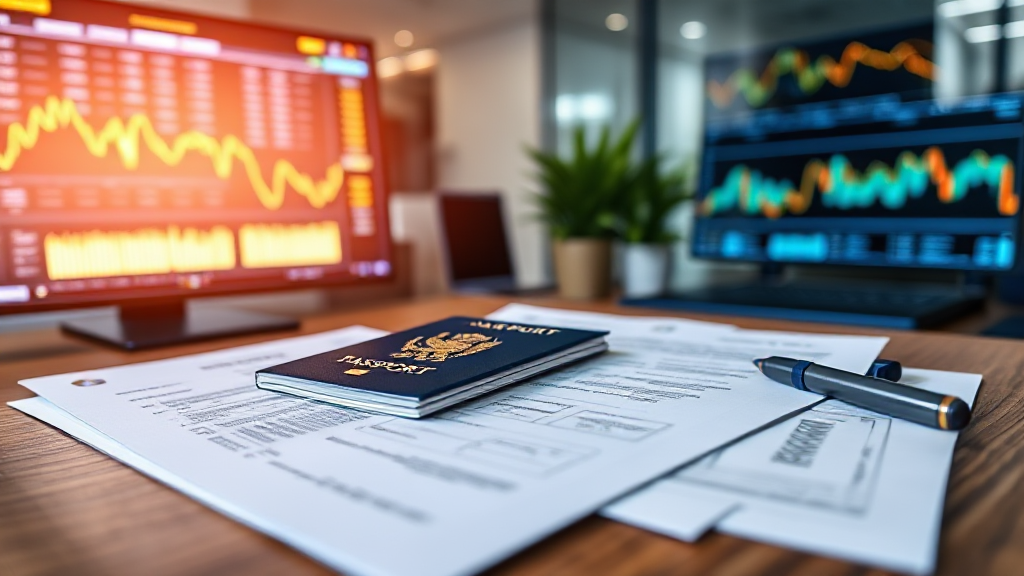
Vanuatu Citizenship Documents vs. Application Form: Which One Really Decides Your Approval?
The most common mistake people make when applying for Vanuatu citizenship is treating the application form as the hard part and the supporting documents as an afterthought. In reality, it is almost always the other way around. The form asks for names, dates and declarations. The attachments are what prove those declarations are true, consistent and verifiable. When I worked through the requirements myself, reviewing each document category one by one, the pattern became obvious: applications rarely collapse because someone filled in a field incorrectly. They collapse because a police clearance expired, a translation was not certified, or a bank statement did not match the source of funds narrative.
If you want a structured reference for how these attachments fit together, https://vanuatucitizenshipform.net/ lays out the supporting document categories in a way that mirrors how reviewers actually read a file. What follows is my own assessment of what matters before you start, based on testing the preparation process against the real requirements rather than skimming a checklist.
Why the Supporting Documents Carry More Weight Than the Form
A citizenship application is essentially an evidence file with a cover sheet. The cover sheet tells the reviewer what you claim. The evidence tells them whether to believe it. That is why the guidance consistently emphasizes that refusals stem from attachments rather than the form itself. A missing page, an uncertified copy or an unexplained deposit can stall a file that is otherwise perfectly completed.
This changes how you should prepare. Instead of filling the form first and gathering documents afterward, work backward. Identify every document category you will need, confirm you can actually obtain each one, and only then start drafting the form. That sequence prevents the awkward situation where you have declared a residential address you cannot prove or a funding source you cannot document.
Police Clearance Certificates: Timing Is the Real Challenge
Police clearance is usually the document that causes the most anxiety, not because it is difficult to request but because of its shelf life. Certificates are typically valid for a limited window, and that window is measured against the submission date, not the date you started preparing. If you request a clearance too early, it may expire before your file is complete. If you request it too late, it becomes the bottleneck holding up everything else.
The practical approach is to map out every other document first, estimate how long translations and certifications will take, and then schedule the police clearance so it lands near the end of your preparation timeline. If you have lived in multiple countries, each jurisdiction may have its own processing speed and format requirements, so build in extra buffer for the slowest one rather than the fastest.
Civil Records and Translations: Where Small Errors Become Big Problems
Birth certificates, marriage certificates and similar civil records form the backbone of identity verification. The difficulty is rarely the document itself. It is the chain of handling between the original registry and the final submitted copy. Names spelled differently across documents, missing middle names, or dates formatted in conflicting ways all create hesitation for a reviewer who is trying to confirm you are the same person across every page.
Translations add another layer. A translation that is accurate but not properly certified, or certified but not accompanied by the required copy of the original, can be treated as incomplete. Apostille requirements vary depending on where the document was issued and where it will be used. Before you commission any translation, confirm the exact certification format expected, because redoing a certified translation is both expensive and slow.
Proof of Address and Bank Statements: Consistency Beats Volume
Proof of address sounds simple until you try to assemble it. Utility bills, tenancy agreements and official correspondence all serve different purposes, and reviewers are looking for consistency rather than quantity. A single utility bill that matches the address on your application is worth more than five documents that each show a slightly different spelling or a different apartment number.
Bank statements follow the same logic. Reviewers are not looking for the largest balance. They are looking for a coherent financial picture that matches what you have declared elsewhere in the file. Statements should cover the required period without gaps, and any unusual activity should be explainable. If a large deposit appears, be prepared to show where it came from, because an unexplained inflow invites questions that a well-documented one does not.
Source of Funds Documentation: The Section Most Applicants Underestimate
Source of funds is where preparation quality becomes most visible. It is not enough to show that money exists. You need to show how it was earned, accumulated or transferred, with a paper trail that connects the origin to the present. Salary records, business sale agreements, investment statements, inheritance documents and tax filings all play a role depending on your circumstances.
The mistake I see most often is treating source of funds as a single document rather than a narrative. A bank statement shows the money arrived. It does not show why. Pairing each significant figure with the document that explains it turns a confusing pile of paper into a story a reviewer can follow in minutes. That is the difference between a file that moves forward and one that generates follow-up questions.
Building a Preparation Sequence That Actually Works
Once you understand each category, the sequence becomes clearer. Start with civil records, since they take the longest to obtain and correct. Move to translations and certifications, because they depend on the originals. Handle proof of address and bank statements in parallel, since they draw on accounts and utilities you already control. Schedule police clearances so they remain valid at submission. Finish with source of funds, because it is the section most likely to require additional documents once you begin assembling it.
Throughout this process, keep a single master list with status columns: obtained, translated, certified, verified. A document is not ready until it has passed every stage, and treating those stages separately prevents the common failure of submitting a translation before the certification is complete.
Frequently Asked Questions
How long before applying should I start gathering documents?
Begin at least several months ahead, primarily because civil records and police clearances have their own processing timelines. Starting early also gives you room to correct discrepancies in names or dates before they become urgent.
Can I submit photocopies instead of original documents?
Requirements vary by document type and issuing authority. Some categories accept certified copies while others expect originals or apostilled versions. Confirm the expected format for each specific document rather than assuming one rule applies across the board.
What happens if my police clearance expires before submission?
You will typically need to obtain a new one. This is why timing matters so much. Request clearances late enough that they remain valid through submission, but early enough that processing delays do not hold up the rest of your file.
Why do applications get refused over documents rather than the form?
Because the form only contains claims, while the documents contain proof. Incomplete, inconsistent or uncertified attachments leave claims unverified, and unverified claims are what cause refusals.
If there is one action to take away from this review, it is this: before you write a single line on the application form, confirm you can produce every supporting document in the required format. That single decision, made early, eliminates most of the problems that derail applications later.
Leave a Reply