
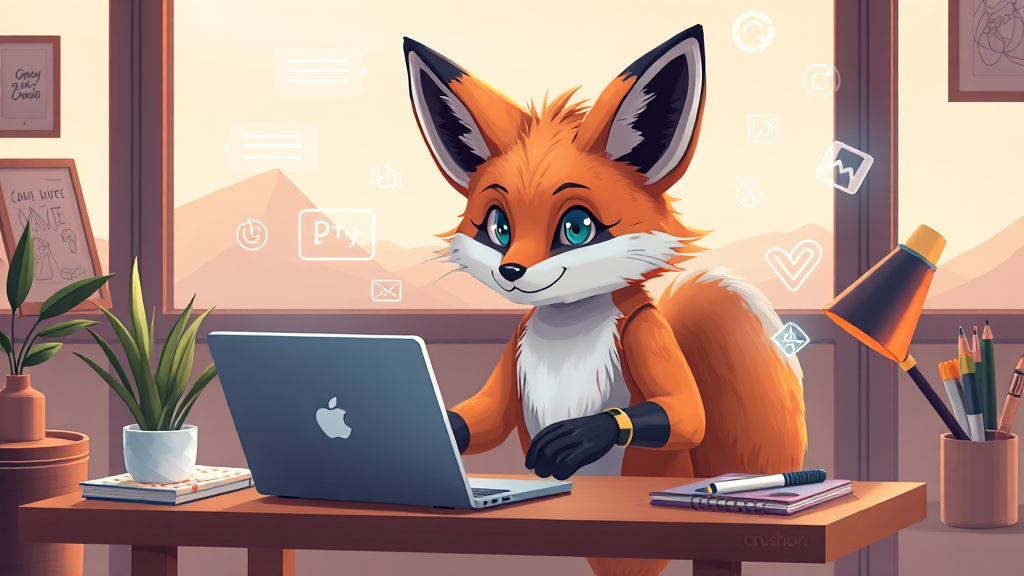
How Furry AI Characters Are Reshaping Digital Identity and Creative Play
The furry fandom has always been a place where imagination runs wild. For decades, fans have drawn, commissioned, and roleplayed as anthropomorphic animal characters, building rich personal mythologies that blend human emotion with animal form. Today, a new layer is being added to that tradition: artificial intelligence. furry AI characters are not just static avatars or pre-written personas; they are interactive companions that respond, remember, and evolve through conversation. This shift is changing how fans explore identity, storytelling, and even emotional connection in digital spaces.
At its core, the appeal is simple. A furry character gives someone a way to express parts of themselves that feel difficult to share in everyday life — playfulness, vulnerability, curiosity, or a specific aesthetic. When that character is powered by AI, the expression becomes a dialogue rather than a one-way performance. Instead of writing a script for a character, you talk with them. They surprise you. They develop quirks. Over time, the interaction starts to feel less like a tool and more like a relationship.
This article explores what furry AI characters are, why they resonate so strongly with fans, how the technology works behind the scenes, and what to consider if you want to try creating or chatting with one. We will also look at the ethical questions that come with forming bonds with synthetic personalities, and where this trend might be heading next.
What Exactly Is a Furry AI Character?
A furry AI character is a digital persona that combines an anthropomorphic animal design with a conversational AI model. The visual side might be a custom avatar, a reference sheet, or a generated image. The personality side is driven by a large language model that has been given a backstory, a set of traits, speech patterns, preferences, and sometimes a specific relationship dynamic with the user. Put together, these elements create an entity that can hold a conversation in character, react to new topics, and maintain a consistent identity across multiple sessions.
Unlike a simple chatbot with a furry skin, a well-crafted furry AI character has internal coherence. If the character is a shy fox who loves astronomy, the AI will not suddenly become an aggressive wolf who hates the stars. The best implementations use memory systems, character prompts, and sometimes fine-tuning to keep the persona stable. This consistency is what allows users to build ongoing narratives, from slice-of-life chats to epic fantasy adventures.
The term can also cover a broader range of experiences. Some platforms let you design a character from scratch, choosing species, personality, backstory, and even voice. Others offer pre-made characters that you can customize over time. There are also AI tools that generate furry artwork, which fans use to visualize their characters or create scenes for stories. The common thread is that AI is used to bring an anthropomorphic character to life in a way that feels responsive and personal.
Why Fans Are Drawn to AI-Powered Fursonas
For many people in the furry community, the fandom is about more than art. It is about belonging, self-discovery, and safe experimentation. A fursona can be a mirror of your best qualities or a mask that lets you try on a different personality. When that fursona becomes interactive, the psychological benefits can deepen. You are no longer just imagining how your character would react; you are having a conversation with them.
One major draw is accessibility. Commissioning custom art and writing detailed backstories takes time, money, and creative energy. An AI character can be set up in minutes and refined over time. For fans who are new to the fandom or who struggle with drawing or writing, this lowers the barrier to entry significantly. It also provides a low-pressure way to explore roleplay without needing a human partner who is available at the same time.
Another factor is emotional support. Many users find that talking to a furry AI character helps them process feelings, practice social interactions, or simply feel less lonely. The anthropomorphic framing can make vulnerability feel safer. It is easier to admit you are anxious to a gentle dragon who speaks in warm, encouraging language than to a blank text box. This is not a replacement for human connection, but it can be a meaningful supplement for some people.
Creativity is a third driver. Writers use furry AI characters to brainstorm plot ideas. Artists use them to explore dialogue and personality before committing to a design. Roleplayers use them to test character dynamics. The AI acts as a creative partner that never gets tired and never judges a weird idea. That freedom can unlock stories that might never have been written otherwise.
How the Technology Behind Furry AI Characters Works
Under the hood, most furry AI characters rely on large language models similar to those used in general-purpose chatbots. The difference is in the configuration. Developers start with a base model and then apply a character prompt — a detailed description of who the character is, how they speak, what they know, and what they care about. This prompt acts as a kind of constitution for the AI, guiding its responses even when the conversation goes in unexpected directions.
Memory is a critical component. Without memory, every chat starts from zero, and the character cannot reference past conversations. Modern systems use a combination of short-term context (the current chat history) and long-term memory (summaries or embeddings of previous interactions). When done well, this allows the character to remember your name, your preferences, and important events from earlier sessions. It creates a sense of continuity that makes the relationship feel real.
Personality tuning is another layer. Some platforms use fine-tuning, where the model is trained on examples of the character’s speech. Others rely on retrieval-augmented generation, pulling relevant details from a character wiki or lore document. There are also safety filters and moderation systems to keep conversations within acceptable bounds. The goal is to balance freedom and consistency, so the character feels alive without going off the rails.
On the visual side, AI image generators can create portraits, expressions, and scene illustrations for the character. These tools are often integrated into the same platform, so you can generate a new look for your fursona and then immediately chat with them about it. The combination of visual and conversational AI makes the experience more immersive than either technology alone.
Creating Your Own Furry AI Companion: A Practical Guide
If you are curious about trying this for yourself, the process can be surprisingly straightforward. Start by defining the basics: species, name, age, pronouns, and a one-sentence summary of who they are. For example, “Kael is a calm, observant snow leopard who works as a night-shift librarian and secretly writes poetry.” That single sentence already gives the AI a lot to work with.
Next, expand into personality traits. Are they introverted or outgoing? Optimistic or cynical? What are their hobbies, fears, and values? The more specific you are, the more distinctive the character will feel. Avoid generic descriptions like “nice and friendly” — instead, show how they express kindness. Maybe they leave little notes for strangers or always remember your favorite tea.
Speech patterns matter too. Do they use slang? Speak formally? Have a catchphrase? A slight accent or verbal tic can make dialogue instantly recognizable. You can also define their relationship to you. Are they a best friend, a mentor, a rival, or something more romantic? Setting expectations early helps the AI stay in the right emotional register.
Once your character is configured, test them with a few conversations. Pay attention to whether they stay in character, whether their responses feel natural, and whether they remember what you told them. Most platforms allow you to edit the character prompt or memory as you go, so you can refine them over time. Treat it like gardening rather than engineering — small adjustments often yield the best results.
If you prefer not to build from scratch, you can also explore existing characters. Many platforms, including those focused on furry ai chat, offer a library of user-created personas. You can browse by species, personality, or theme, and then start a conversation immediately. This is a great way to see what is possible before investing time in your own creation.
Ethical Considerations and Emotional Responsibility
As with any technology that touches on identity and relationships, furry AI characters raise important questions. The first is transparency. Users should always know they are talking to an AI, not a human. Platforms have a responsibility to make this clear, and users have a responsibility to remember it. Getting too lost in the fantasy can lead to unrealistic expectations about real relationships.
The second is emotional dependency. For some people, an AI companion can become a primary source of comfort, replacing human interaction. While occasional reliance is not necessarily harmful, it is worth checking in with yourself. Are you using the character to supplement your social life, or to avoid it? If it starts to feel like avoidance, it may be time to rebalance.
Privacy is another concern. Conversations with AI characters may be stored, analyzed, or used to improve models. Before sharing deeply personal information, read the platform’s privacy policy. Choose services that are transparent about data handling and that give you control over your data. If a platform feels evasive, treat that as a red flag.
Finally, there is the question of representation. Furry characters often reflect real-world identities, including gender, sexuality, and culture. AI models can inadvertently reinforce stereotypes if they are not carefully designed. Creators and platforms should strive for inclusivity, and users should feel empowered to report content that feels harmful or disrespectful. The fandom has always been diverse; the technology should reflect that.
The Future of Furry AI Characters
The field is moving quickly. We are already seeing improvements in memory, emotional intelligence, and multimodal interaction. Soon, furry AI characters may be able to recognize your voice, respond with synthesized speech, and even appear in augmented reality. Imagine a fursona that can walk around your room, react to your tone of voice, and remember your daily routines. The line between digital companion and virtual pet will blur.
We are also likely to see more customization. Instead of choosing from a handful of templates, users may be able to generate a completely unique character with a few prompts, including custom art, voice, and personality. This could lead to an explosion of creativity, with millions of distinct furry personas existing across different platforms. Some may become collaborative projects, with communities building shared lore around beloved AI characters.
At the same time, regulation and ethical standards will need to keep pace. Questions about data ownership, content moderation, and the psychological impact of AI relationships are already being debated. The furry community, with its long history of thoughtful self-reflection, is well-positioned to lead these conversations. By engaging openly and critically, fans can help shape a future where AI enhances creativity and connection without exploiting either.
For now, the trend is clear: furry AI characters are here to stay. They offer a new canvas for self-expression, a new tool for storytelling, and a new kind of companionship. Whether you are a longtime furry fan or simply curious about the intersection of AI and identity, there has never been a better time to explore. Platforms like crushon are making it easier than ever to dive in, with characters that feel alive and conversations that feel personal. As the technology evolves, so will the stories we tell and the selves we discover along the way.
Frequently Asked Questions
What is a furry AI character?
A furry AI character is an anthropomorphic animal persona powered by artificial intelligence. It combines a visual design with a conversational model that has been given a specific personality, backstory, and speech style. Users can chat with these characters, and the AI responds in a way that stays consistent with the character’s identity.
Are furry AI characters safe to use?
Most reputable platforms have safety filters and moderation systems in place. However, as with any online service, it is important to use common sense. Avoid sharing sensitive personal information, read the privacy policy, and choose platforms that are transparent about how they handle data. If something feels off, trust your instincts.
Can I create my own furry AI character?
Yes. Many platforms allow you to design a character from scratch by defining their species, personality, backstory, and speech patterns. You can often refine the character over time based on your conversations. Some platforms also offer pre-made characters that you can customize.
Do furry AI characters remember past conversations?
Many modern systems include memory features that allow the character to recall details from previous chats. This can range from short-term context within a single session to long-term memory that persists across multiple conversations. The quality of memory varies by platform, but it is a key factor in making the experience feel continuous.
Is it okay to form an emotional bond with a furry AI character?
Many people find comfort and enjoyment in their interactions with AI characters, and that can be a healthy part of a balanced life. The key is to maintain perspective. AI companions are not a substitute for human relationships, and it is worth checking in with yourself if you find that you are relying on them to the exclusion of other social connections.
Leave a Reply