
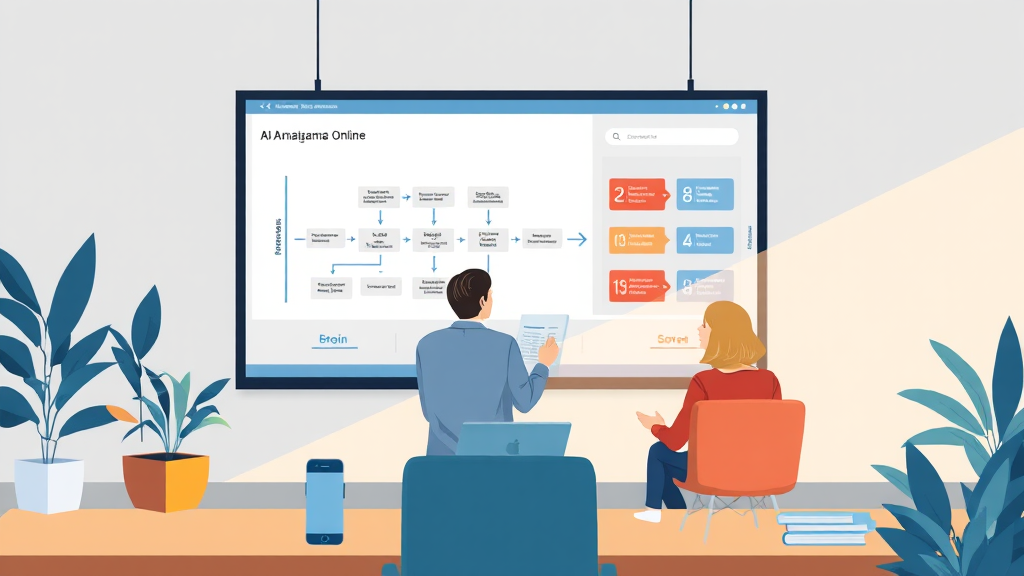
AI Consulting Services: A Practical Playbook for Choosing the Right Partner
Most companies now agree that artificial intelligence will shape their next five years. Far fewer know what to actually do on Monday morning. That gap between ambition and execution is exactly where AI consulting services earn their keep. A good consultant does not hand you a glossy strategy deck and disappear. They map your real workflows, test what works, and leave you with systems your team can run without a translator.
This playbook walks through what AI consulting actually involves, how to scope an engagement, where projects usually fail, and how to tell a serious partner from a vendor with a chatbot demo. If you are evaluating outside help this quarter, the sections below will save you both budget and frustration.
What AI Consulting Services Actually Cover
The phrase “AI consulting” gets stretched to cover everything from a two-hour workshop to a multi-year transformation program. In practice, most credible engagements fall into five buckets.
Opportunity assessment. Consultants interview department leads, review process documentation, and rank use cases by impact, feasibility, and data readiness. The output is a shortlist, not a wish list. A useful assessment will tell you which three ideas to pursue and which twenty to shelve.
Workflow audits. This is the unglamorous work that determines success. Before anyone trains a model, someone has to trace how a request enters your business, who touches it, where it stalls, and what a good outcome looks like. Automation applied to a broken process just produces broken results faster.
Solution design and prototyping. Here the consultant builds a working proof of concept against real data — not a synthetic demo. The goal is to learn quickly whether the approach survives contact with messy production inputs.
Implementation and integration. Connecting models to your CRM, ticketing system, data warehouse, or internal knowledge base. This is where most of the engineering hours live, and where underestimated projects quietly die.
Enablement and governance. Training your staff, documenting the system, setting review checkpoints, and defining what happens when the model is wrong. Without this layer, adoption stalls within weeks.
If a proposal skips any of these stages, ask why. Sometimes there is a good reason. Often there is not.
Why the Workflow Audit Comes First
Teams frequently want to start with the model. It is the exciting part. But the model is rarely the bottleneck. The bottleneck is usually unclear ownership, inconsistent input formats, or a handoff that depends on one person remembering to forward an email.
A disciplined audit answers four questions before any code is written:
- Where does the work originate, and in what format?
- Which steps require judgment, and which are pure repetition?
- What does a correct output look like, and who verifies it today?
- What is the current cost — in hours, errors, or delayed response time?
Once those answers exist, the automation scope becomes obvious. You stop debating abstract capabilities and start solving a specific, measurable problem. This is also how you build a defensible business case: you can show the before-and-after in numbers your finance team recognizes.
Consultants who lead with an audit tend to deliver faster than those who lead with a platform pitch. The audit forces honesty about data quality, edge cases, and internal politics — all of which surface eventually, just more expensively if discovered mid-build.
How to Scope an Engagement Without Overcommitting
The safest structure for a first AI project is a phased engagement with explicit exit points. You want to buy information before you buy scale.
Phase one: discovery and audit. Two to four weeks. Deliverables include a process map, a prioritized use-case list, and a cost model. At the end, you decide whether to continue.
Phase two: prototype. Four to eight weeks. One or two use cases built against real data, with accuracy measured against a baseline your team defines. Success criteria should be agreed in writing before work begins.
Phase three: production rollout. Scoped after the prototype, not before. By this point you know the integration complexity, the failure modes, and the actual user adoption challenges.
This structure protects you in two ways. It limits financial exposure if the approach does not fit, and it gives internal stakeholders a natural moment to review progress rather than discovering problems at the end.
Be wary of proposals that bundle all three phases into one fixed price with no review gates. Confidence is fine; verifiable milestones are better.
Where AI Projects Usually Fail
After enough engagements, failure patterns become predictable. Most of them have nothing to do with model quality.
Solving a problem nobody owns. If no department feels accountable for the outcome, the project has no internal champion and will be deprioritized the moment budgets tighten.
Ignoring the last mile. A model that produces a correct answer into a dashboard nobody opens has created zero value. The output has to land where work actually happens — the ticket, the inbox, the CRM record.
Underestimating data preparation. In most organizations, cleaning and structuring data consumes more time than modeling. Proposals that allocate ten percent of effort to data work are usually optimistic by an order of magnitude.
No human review loop. Early deployments need a checkpoint where a person can catch errors and feed corrections back. Removing that loop too soon creates silent quality drift.
Measuring the wrong thing. Accuracy percentages impress nobody in operations. Time saved per case, reduction in escalation rate, and faster response times are the metrics that survive a quarterly review.
A consulting partner worth hiring will raise these risks before you do. If they only talk about possibilities, they are selling, not advising.
Questions That Separate Strong Partners from Weak Ones
You can learn a great deal in a single introductory call. Ask these questions and listen carefully to the answers.
“Show me a workflow you automated that is similar to ours.” Vague references to “enterprise clients” mean nothing. Specific process descriptions — intake triage, document classification, support routing — signal real experience.
“What happens when the model is wrong?” A strong answer includes fallback paths, confidence thresholds, and escalation rules. A weak answer assumes the model will simply be right.
“Who owns the system after handover?” If the answer is “we do, on retainer,” understand that you are buying a dependency. That may be acceptable, but it should be a conscious choice.
“How will you measure success in the first ninety days?” Look for concrete operational metrics tied to your baseline, not generic statements about efficiency.
“What would make you recommend we not proceed?” Consultants who can describe conditions for walking away are usually the ones who will tell you the truth mid-project.
Building Internal Capability Alongside the Build
The best outcome of an AI consulting engagement is not a finished system. It is a team that understands how the system works and can extend it.
Insist on knowledge transfer as a deliverable, not a courtesy. That means documented architecture, commented configuration, recorded walkthroughs, and at least one internal engineer or analyst who has been hands-on during the build rather than briefed afterward.
Pair this with lightweight governance. You do not need a fifty-page policy document for a first project. You do need clear answers to a few questions: who approves changes to prompts or thresholds, how outputs are logged, and what triggers a review of the system’s performance.
Organizations that treat enablement as optional tend to rehire consultants for the same problem eighteen months later. Organizations that invest in it compound their advantage with each subsequent project.
Costs, Timelines, and Realistic Expectations
Pricing varies widely by scope and region, but the shape of a reasonable budget is fairly consistent. Discovery and audit work is typically the smallest line item and the highest leverage. Prototyping costs more because it involves engineering time. Production rollout costs the most because it includes integration, testing, and change management.
Timelines follow the same pattern. A focused audit can complete in weeks. A single production use case usually takes one to two quarters from kickoff, depending on integration complexity and how quickly your team can make decisions.
The most common budgeting mistake is funding the build but not the adoption. Training, documentation, and a period of supervised operation are not overhead — they are what converts a working prototype into a working process.
Frequently Asked Questions
How do I know if my company is ready for AI consulting services?
You are ready when you can name a specific, repetitive process with measurable volume and a clear owner. You do not need clean data or a dedicated data science team. You do need at least one internal person who will champion the project and can make decisions quickly.
How long does a typical engagement take?
A workflow audit usually runs two to four weeks. A prototype takes another one to two months. Full production rollout depends on integration complexity but commonly spans one to two quarters. Phased structures with review gates keep timelines honest.
Will AI consulting replace members of my team?
In most well-scoped projects, the goal is to remove repetitive work so people can focus on judgment-heavy tasks. Roles shift rather than disappear. Where headcount changes are expected, a responsible consultant will say so early rather than after implementation.
What data do we need to get started?
Less than most people assume. Historical examples of the process — even a few hundred records — are usually enough for a prototype. The audit phase will identify gaps and prioritise what to clean or collect before scaling.
How should we measure return on investment?
Anchor the measurement to your existing baseline: hours per case, error rate, response time, or cost per transaction. Compare the same metric after deployment. Avoid composite scores that cannot be traced back to operational reality.
What happens after the consultant leaves?
If the engagement was structured well, your team operates the system with documentation, monitoring, and a defined escalation path. Plan for a short hypercare period after handover, and keep the original success metrics under review for at least two quarters.
Final Thoughts
AI consulting is not a shortcut around the hard work of understanding your own operations. It is a way to borrow experience while you build that understanding. The engagements that succeed are the ones that start with a clear problem, measure honestly, and transfer capability rather than creating dependency.
Choose a partner who asks uncomfortable questions early, scopes in phases, and defines success in numbers your operations team already tracks. Do that, and the technology becomes what it should be: a reliable part of how your business runs, not a science project on the side.
Leave a Reply